If you've been putting off buying a new ute, trailer, or piece of equipment because you weren't sure the instant asset write-off would still be around next year, there's good news. The 2026-27 Federal Budget announced the $20,000 threshold will become a permanent fixture rather than something Parliament renews year by year. Here's what it actually means, what's confirmed, and what it means for how you finance the purchase.
The short version: if your business turns over less than $10 million, you'll be able to instantly deduct eligible assets under $20,000 from 1 July 2026, without a Budget-night countdown hanging over every purchase decision.
What Actually Changed in the 2026-27 Budget
For years, the $20,000 instant asset write-off has been extended on a temporary, year-by-year basis, usually confirmed only months before the previous version was due to expire. That uncertainty made it hard to plan bigger purchases with confidence. The 2026-27 Budget, handed down on 12 May 2026, proposed ending that cycle by making the $20,000 threshold a standing feature of the tax system from 1 July 2026 for small businesses with aggregated turnover under $10 million. If you're planning to finance the purchase, structures like a chattel mortgage are generally the most straightforward way to stay eligible, since your business owns the asset from day one.
The change needed the Treasury Laws Amendment (Tax Reform No. 2) Bill 2026 to pass Parliament, and it passed both houses on 19 August 2026. The ATO's own guidance is the place to confirm the details before you lodge, but the direction is now settled: the threshold no longer depends on a yearly extension.
What You Can Actually Claim
Eligible small businesses can immediately deduct the full cost of a depreciating asset costing less than $20,000, in the year it's first used or installed ready for use, rather than depreciating it over several years. The threshold applies per asset, not per year, so multiple purchases can each qualify as long as every individual asset comes in under $20,000.
| Period | Instant asset write-off threshold |
|---|---|
| 1 July 2023 to 30 June 2026 | $20,000, renewed annually |
| From 1 July 2026 | $20,000, permanent, no expiry |
Assets costing $20,000 or more still go into the small business depreciation pool, deducted at 15% in the first year and 30% each year after. What matters for the write-off isn't what you paid out of pocket after a trade-in, it's the asset's cost before any trade-in is applied.
Chattel Mortgage and the Write-Off: Why the Finance Structure Matters
How you finance an asset doesn't change whether it qualifies for the write-off, but it does affect whether you're in a position to claim it at all. Under a chattel mortgage, your business owns the asset from day one, even though the lender holds it as security until the loan is repaid. That ownership from the outset is what makes chattel mortgage the go-to structure for businesses planning to use the instant asset write-off, since you need to own the asset to claim the deduction.
Other structures like finance leases work differently for tax purposes, since the financier retains ownership. If claiming the write-off is part of your purchase plan, it's worth confirming with your accountant that the finance structure you're using actually supports it.
Trucks and Heavy Equipment: A Bigger Opportunity for Tradies
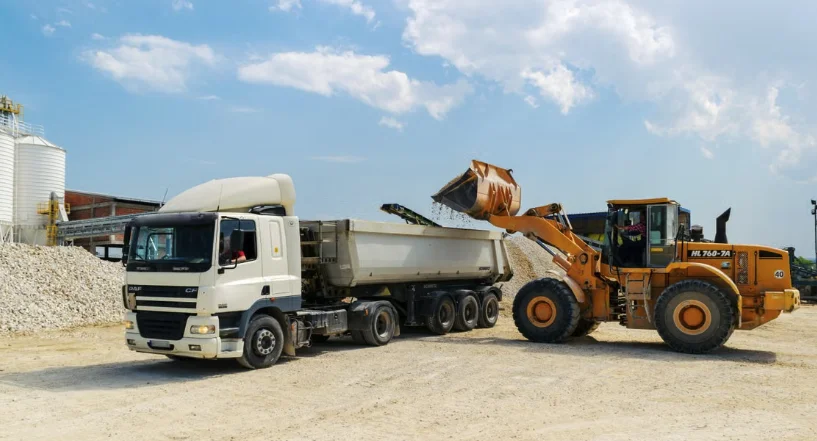
The per-asset nature of the threshold is where it gets genuinely useful for tradies and small operators. A tradie replacing a set of tools, a compressor, and a trailer in the same year could potentially write off all three immediately, provided each one individually costs under $20,000, even if the combined spend is well over that.
For anything above the threshold, like a new truck or a larger piece of equipment, the purchase still goes into the depreciation pool rather than being written off instantly, but financing it through a chattel mortgage keeps the ownership structure consistent with how the ATO expects these claims to work. If you're planning a fleet upgrade or a bigger single purchase, it's worth mapping out which parts of the spend might sit above and below the threshold before you buy.
The Other Budget Change Businesses Are Missing: Loss Carry-Back
The instant asset write-off has grabbed most of the headlines, but the Budget also introduced a loss carry-back measure that's flying under the radar for a lot of small business owners. From an income year starting on or after 1 July 2026, companies with turnover up to $1 billion (and that aren't significant global entities) will be able to carry back a tax loss and apply it against tax paid in either or both of the previous two income years, generating a refund rather than just a future deduction.
This is more relevant to companies than sole traders, but if your business is structured as a company and has had a strong year followed by a leaner one, it's worth discussing with your accountant alongside your write-off planning, since both measures affect how you time purchases and manage cash flow around the same tax year.
Instant Asset Write-Off FAQs
Is the $20,000 instant asset write-off definitely permanent now?
Yes. The Bill making it permanent from 1 July 2026 passed both houses of Parliament on 19 August 2026. It applies to businesses with aggregated turnover under $10 million, on a per-asset basis.
Does the write-off apply to used equipment and vehicles?
Yes. The asset doesn't need to be new, it just needs to be first used or installed ready for use in the income year you're claiming it, and cost under $20,000.
Can I claim the write-off if I finance the asset through a chattel mortgage?
Yes. Since a chattel mortgage gives your business ownership of the asset from the start, it's generally compatible with claiming the instant asset write-off, unlike finance structures where the financier retains ownership.
Key Takeaways
- The $20,000 instant asset write-off is permanent from 1 July 2026 for businesses turning over under $10 million
- The Bill passed both houses of Parliament on 19 August 2026, ending the year-by-year renewals
- The threshold applies per asset, so multiple sub-$20,000 purchases in the same year can each qualify
- Chattel mortgage finance keeps you eligible for the write-off since your business owns the asset from day one
- A separate loss carry-back measure for companies also starts from FY2026-27, worth discussing alongside your equipment plans
Whether you're financing tools, a trailer, or a full truck upgrade, our brokers at Loans123 compare 30+ lenders to find a finance structure that fits both your budget and your tax position. Call 1800 079 147 or apply online.
This article provides general information only. It does not constitute financial advice. Please consider your personal circumstances before making any financial decisions. Loans123 holds Australian Credit Licence 512846.
Ready to see what you could borrow?
Loans123 compares more than 30 lenders from our Victoria Park office in Perth. Read more about our Chattel Mortgage and Truck Loans, or get a quote now.
Checking your options has no impact on your credit score.
Written by

Trent Cray
Finance Specialist, Loans 123
Trent is a Finance Specialist at Loans 123 in Victoria Park, Perth. He helps customers compare more than 30 lenders to find car, personal and business finance that suits their situation.
Meet the Loans 123 team