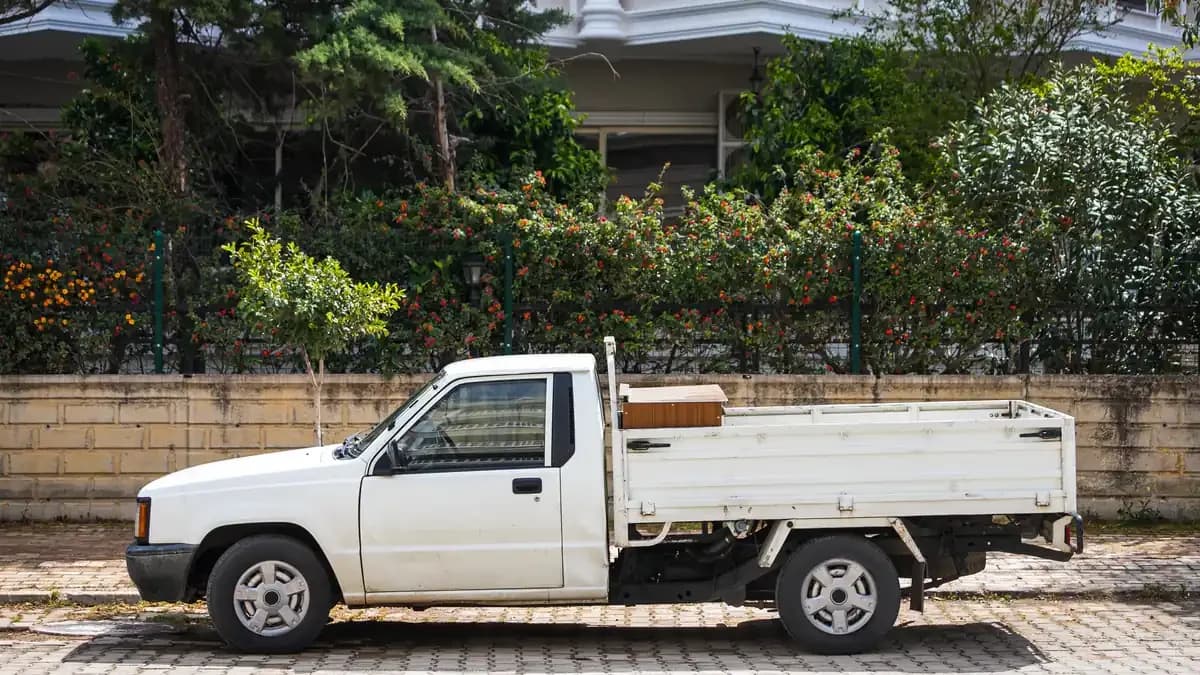
A chattel mortgage is a business loan for a vehicle such as a car, ute or van, where your business owns the vehicle from the day the loan settles and the lender holds security over it until the debt is repaid. Repayments are usually fixed, and many loans finish with a balloon payment.
This guide covers how a chattel mortgage works step by step, how GST and tax apply to cars, utes and vans, and what a balloon does to the total cost. It also sets out the downsides, what lenders ask for and the extra costs of buying in WA.
How a chattel mortgage works
"Chattel" is an old legal word for a moveable asset, as opposed to land or a building. A chattel mortgage is simply a secured loan over something that moves, which here means your work vehicle.
The steps are the same whether you buy from a dealer or a private seller. The protection is not, because Consumer Protection WA says the consumer guarantees on a dealer purchase do not cover private sales.
- You choose the vehicle and agree a price with the seller.
- The lender pays the seller, and the vehicle is registered in your business's name.
- The lender takes security over the vehicle for the life of the loan.
- You make regular repayments over the agreed term.
- After the final payment, including any balloon, the lender releases its security.
People often ask whether the business really owns the car, and it does. That is the main difference from a lease or hire purchase, where the financier holds title while you pay.
The lender's security is the part that carries risk for you. If repayments stop, the lender can take the vehicle and sell it to recover what is owed.
Chattel mortgage for a business car: GST and tax
Because you own the vehicle, a business car chattel mortgage is treated as a purchase for tax, not as a rental. That is where most of the appeal comes from.
A business that is registered for GST can generally claim a credit for the GST in the purchase price. The loan itself does not change that, because the seller is paid in full on day one.
On expenses with a mix of business and private use, business.gov.au says you can only claim the portion that is used for your business. Within that share, you can usually claim depreciation, the interest on the loan and running costs such as fuel, insurance and servicing.
A logbook is the usual way to show that split. If the ute does the school run as well as the site run, expect to claim less than the full amount.
The instant asset write-off is the other rule people ask about. It lets an eligible small business deduct the full cost of an asset priced under the threshold straight away, instead of over several years.
Most new work vehicles cost more than that threshold, so they are depreciated over time instead. The $20,000 write-off is listed as permanent from 1 July 2026, for small businesses with turnover up to $10 million, by the Australian Government.
Your accountant can tell you which rules apply to your business and your vehicle before you sign.
Chattel mortgage for utes and vans
A chattel mortgage for utes works exactly like one for a sedan. The loan, the security and the repayments do not change with the body shape.
What can change is the tax treatment. The rules can differ with the type of vehicle and how it is used, so the answer for a panel van is not always the answer for a family wagon.
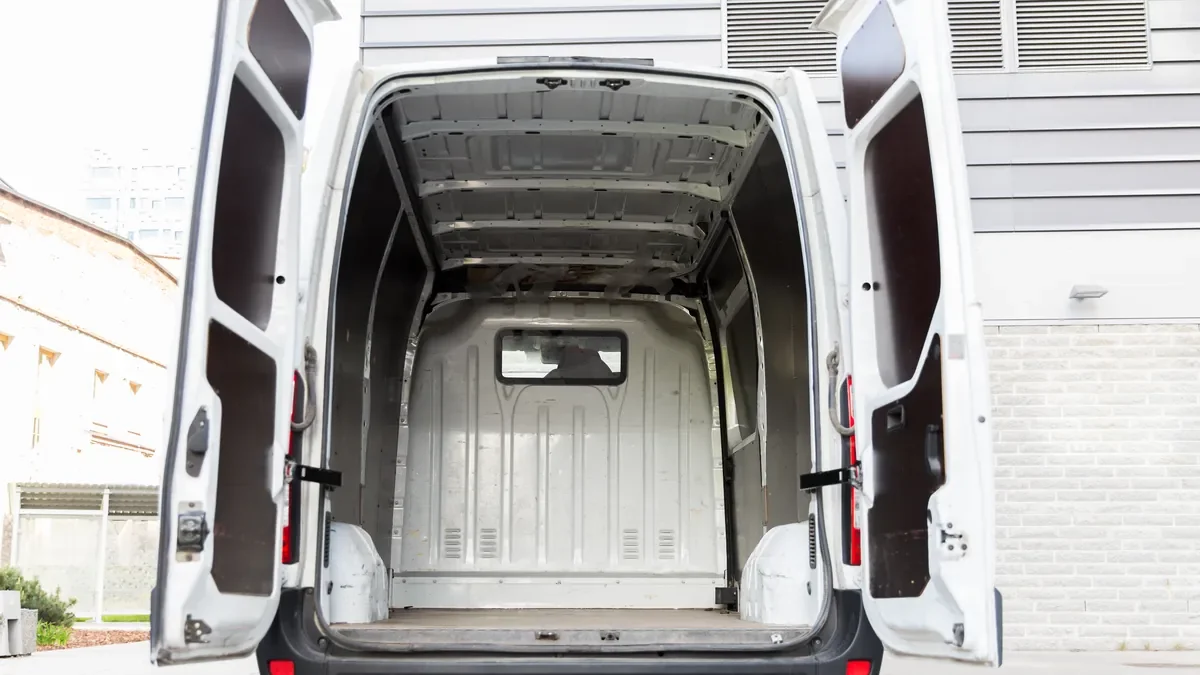
A chattel mortgage for vans raises the same questions, and they are worth settling before you order the vehicle.
Question for your accountant | Why it matters for a ute or van |
|---|---|
How is this vehicle type treated for tax? | The rules for GST credits and depreciation can differ between vehicle types |
How much is business use? | Deductions and GST credits follow the business share only |
Will staff drive it home? | Private use of a work vehicle can bring fringe benefits tax into play |
Are you registered for GST? | Without registration there is no GST credit to claim |
Dual-cab utes deserve a closer look, because they carry passengers as well as a load. Don't assume the tax rules treat one the same way as a single-cab or a panel van.
Heavier vehicles follow the same loan structure. If you are looking at a rigid truck or a prime mover, our truck finance page covers the longer terms that usually apply.
What a balloon does to the total cost
A balloon is a lump sum left until the end of the loan. It lowers each repayment, because you pay off less of the principal along the way.
It also means you pay interest on a bigger balance for longer. The table shows one $50,000 vehicle over five years, using 7.5 per cent a year as a hypothetical rate.
Balloon | Monthly repayment | Total interest |
|---|---|---|
None | $1,002 | $10,114 |
20% ($10,000) | $864 | $11,841 |
30% ($15,000) | $795 | $12,705 |
Source: Loans123 calculations. A hypothetical illustration only, not a Loans123 offer or a rate currently available. Figures are approximate and exclude fees and charges.
The 30 per cent balloon cuts the repayment by about $207 a month. It adds roughly $2,600 in interest and leaves $15,000 to find in year five.
At that point you pay the balloon, refinance it or sell the vehicle. A used work ute may be worth less than the balloon by then, which is the risk to weigh up before choosing a large one.
To test your own numbers, the loan calculator lets you change the amount and the term. Treat any result as a guide until a lender has assessed your application.
Downsides to weigh up
A chattel mortgage suits plenty of businesses, but it is still a secured debt. These are the points we raise with every buyer.
- The lender can repossess the vehicle if you fall behind.
- A balloon leaves a lump sum due when the vehicle is at its oldest.
- Paying the loan out early can attract a fee, so check the contract first.
- Vehicles lose value quickly, and you can owe more than yours is worth.
- Establishment and account fees add to the cost on top of interest.
There is also a legal difference from a personal car loan. ASIC explains that the consumer credit legislation covers loans to individuals that are mainly for personal, domestic or household purposes.
Loans to companies sit outside it, and so do loans that are mainly for business. In practice, the responsible lending rules that apply to a personal car loan do not apply in the same way, so read the contract closely.
Who can get one and what lenders ask for
You need an ABN, and lenders expect the vehicle to be used mainly for business. Sole traders, partnerships, companies and trusts can all apply.
Most lenders ask for a similar set of documents.
What lenders ask for | What it shows |
|---|---|
ABN and GST registration | That the business is active and how long it has traded |
Financials or bank statements | That income covers the repayments |
Vehicle details | Make, model, year, price and who is selling it |
Photo ID | Who the directors or owners are |
Every lender on our panel checks credit, and each weighs these details differently. That is why the same application can get different answers from different lenders.
Applications tend to stall for a handful of reasons. A very new ABN, an older vehicle, a private sale or missing paperwork can each narrow the list of lenders willing to look at it.
A new business has fewer options, though not none. Our guide to getting a business loan as a new business explains what lenders look for in the first year or two.
If you need working capital and not a vehicle, a secured loan is the wrong tool. In that case it is worth reading how unsecured business loans work before you apply.

Chattel mortgage vs hire purchase and leasing
A chattel mortgage is one of four common ways to fund a work vehicle. The right one depends on who you are and whether you want to own the vehicle.
Option | Who owns the vehicle | Usually suits |
|---|---|---|
Chattel mortgage | Your business, from settlement | ABN holders who want to own and keep the vehicle |
Commercial hire purchase | The financier, until the last payment | Businesses that prefer to take title at the end |
Finance lease | The financier, for the whole term | Businesses that replace vehicles often |
Novated lease | The leasing company, during the lease | Employees who salary package through an employer |
The first three are business products, and commercial hire purchase is the closest cousin to a chattel mortgage. The tax treatment differs between them, which is one more question for your accountant.
A novated lease is different again, because it runs through your employer's payroll. If you are an employee and not a business owner, our comparison of a novated lease compared with a car loan is the better place to start.
Buying in WA: licence duty and the PPSR check
Two costs sit outside the loan itself, and WA buyers should budget for both. The first is vehicle licence duty.
The WA Government charges duty when a vehicle is licensed or a current licence is transferred. For light vehicles the rate is 2.75 per cent of the dutiable value up to $25,000, rising on a sliding scale to 6.5 per cent above $50,000.
Heavy vehicles over 4.5 tonnes pay 3 per cent, capped at $12,000. On a $50,000 ute, the light vehicle scale means a duty bill in the thousands, so ask whether it is included in the amount you finance.
The second is a search of the Personal Property Securities Register before you hand over any money. A used vehicle can still have someone else's finance attached to it.
Lenders will often run this check too, but it is your money at risk if nobody does. A search shows if a vehicle has been written off or stolen, or if there is finance still owing on it, according to WA's Small Business Development Corporation.
Private sales need the most care, because nobody else is checking for you. The search costs a couple of dollars against the price of a whole vehicle.
Frequently asked questions
What is a chattel mortgage in simple terms?
It is a business loan secured against the vehicle it pays for. Your business owns the vehicle from the start, and the lender's security comes off once the loan is repaid.
Does the business own the car with a chattel mortgage?
Yes, ownership passes to the business when the loan settles. The lender holds security over the vehicle until the final payment, including any balloon.
How do you calculate chattel mortgage repayments?
Repayments depend on the amount financed, the interest rate, the term and any balloon. A larger balloon lowers each repayment but raises the total interest you pay.
What are the downsides of a chattel mortgage?
The lender can repossess the vehicle if repayments stop, and a balloon leaves a lump sum to pay or refinance. Business loans also sit outside the consumer credit rules that cover personal car loans.
Can a sole trader get a chattel mortgage?
Yes, a sole trader with an ABN can apply, as can a partnership, company or trust. Lenders expect the vehicle to be used mainly for business.
Can I claim GST on a chattel mortgage?
A business registered for GST can generally claim a credit for the GST in the purchase price, in line with its business use. Ask your accountant how the rules apply to your vehicle before you buy.
Comparing chattel mortgages with a broker
The structure is the easy part to understand. The harder part is that each lender prices the same ute, the same ABN and the same balloon differently.
Loans123 is a Perth finance broker that compares business vehicle loans across a panel of 30+ lenders. If you want to see how the options stack up for your vehicle, our page on chattel mortgage finance in Perth explains how it works and includes a repayment calculator.
This article is general information only and does not take your personal circumstances into account. It is not financial advice. Consider whether a product suits you and read the loan terms before you apply.
Ready to see what you could borrow?
Loans123 compares more than 30 lenders from our Victoria Park office in Perth. Read more about our Chattel Mortgage and Commercial Car Loans, or get a quote now.
Checking your options has no impact on your credit score.
Written by

Trent Cray
Finance Specialist, Loans 123
Trent is a Finance Specialist at Loans 123 in Victoria Park, Perth. He helps customers compare more than 30 lenders to find car, personal and business finance that suits their situation.
Meet the Loans 123 team